Visibility for every SKU
See which of your products AI suggests, how frequently, and where rivals take the spot instead.
Shopping
See where your products appear in AI shopping answers, how AI weighs them, and which changes earn more placements.
| SKU | Share of AI answers |
|---|---|
SKU-001Everyday bottle | 41% |
SKU-002Storage box | 28% |
SKU-003Desk lamp | 17% |
Six months of fictional brand trends. Use the metric tabs and focus a month to inspect sample values.
Compare the fictional brands in this sample
| Brand | Visibility | Sentiment | Position |
|---|---|---|---|
| 1Rosebay | 65% | 86 | 2.7 |
| 2Bluehaven | 62% | 62 | 2.9 |
| 3Northwind | 47% | 89 | 3.6 |
| 4Sunfield | 32% | 76 | 3.9 |
| 5Pinegrove | 21% | 88 | 2.3 |
| Domain | Type | Used | Avg. citations |
|---|---|---|---|
| Fforum.example | UGC | 32% | 41% |
| Jjournal.example | Editorial | 43% | 38% |
| Gguide.example | Comparison | 31% | 30% |
| Nnorthwind.example | Corporate | 28% | 24% |
| Aanswers.example | Other | 19% | 17% |
Most cited domains, grouped by type
↗ Fictional brand trends
See which of your products AI suggests, how frequently, and where rivals take the spot instead.
Kept AI reveals which competitor content outranks your products and what to change to win the placement back.
Find the retailers AI suggests most often in your category and decide where to expand your distribution.
Learn the criteria AI relies on when weighing your products against rivals, and where you fall short.
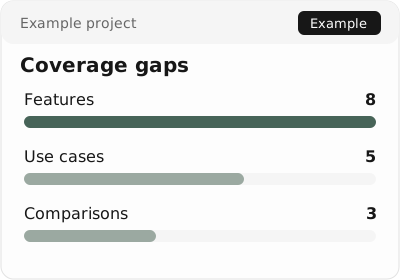
Features
Example data · not customer results
Map each neutral SKU to a clear product page before comparing mentions.
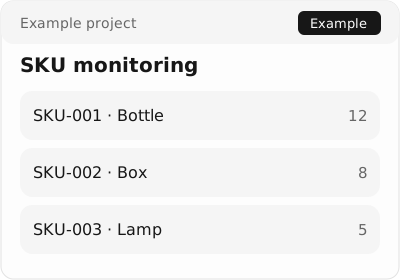
SKU-001 · Everyday bottle · 500 ml
Read the use case that led an answer to recommend an item.
SKU-001 appears in 8 of 40 answers
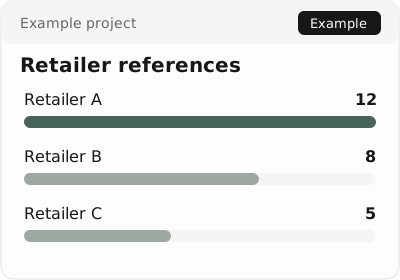
Review cited retailer or product pages for accurate specifications.
SKU-002 · Storage box · 2 source URLs
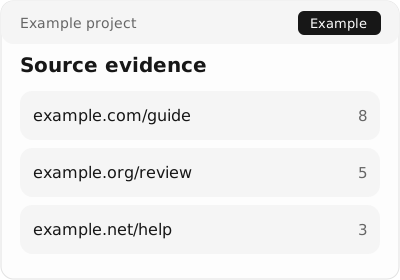
Record a specification or comparison gap for the catalog owner to verify.
SKU-003 · Desk lamp · 1 specification to check
Use stable identifiers and current product specifications.
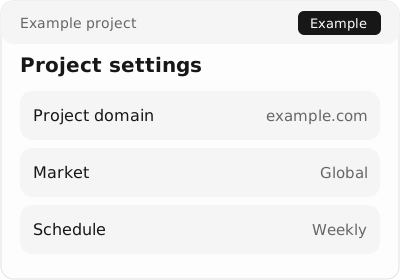
Check which products and retailers appear in sampled answers.
Assign missing attributes or comparison details for correction.
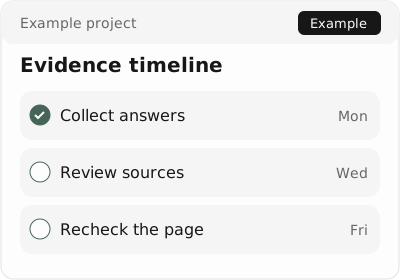
Integrations
Use the data available in your project. MCP reads results; review any assistant-generated draft before exporting or sharing it.
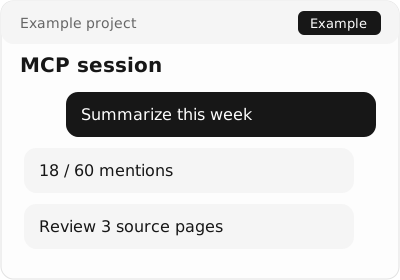
“I would send the catalog owner the SKU, the disputed specification, and the cited URL.”
It measures how your products show up on AI platforms: which items AI suggests, how frequently, and how they stack up against competing products. Kept AI reports visibility per SKU, the prices AI displays, and the updates most likely to win more placements.
Kept AI identifies the product attributes AI relies on when comparing options — price, category positioning, keywords in the description — and shows where rivals beat you and where you lead. You get those comparison criteria plus a prioritized list of fixes for the gaps.
Kept AI ranks the retailers that AI suggests most often for your category, helping you decide where to expand distribution. You also see which retailers gained or lost placements over time.
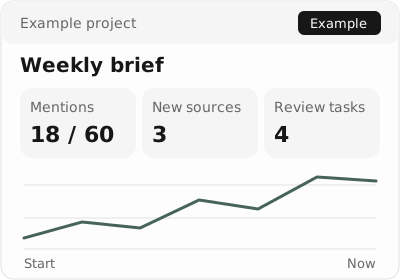
Kept AI reports product visibility (how many AI shopping answers mention your product, as a share), the price AI shows for it, and appearance count (the number of times it shows up across engines). Every metric refreshes daily and shows its trend direction.
Kept AI highlights the answers where you lead and where rivals pull ahead, comparing visibility, share of voice, position and sentiment side by side for every engine.
Import your catalog by CSV (Shopify product exports work too) or via the API. Kept AI then monitors your products in ChatGPT Shopping, Gemini, Perplexity and AI Overviews, with first results within 24 hours.